
Concept Club: Two years of ten-minute arguments
Concept Club began with a line from Coral Bell: "No attempt at definition has been intended, only a contribution to argument."
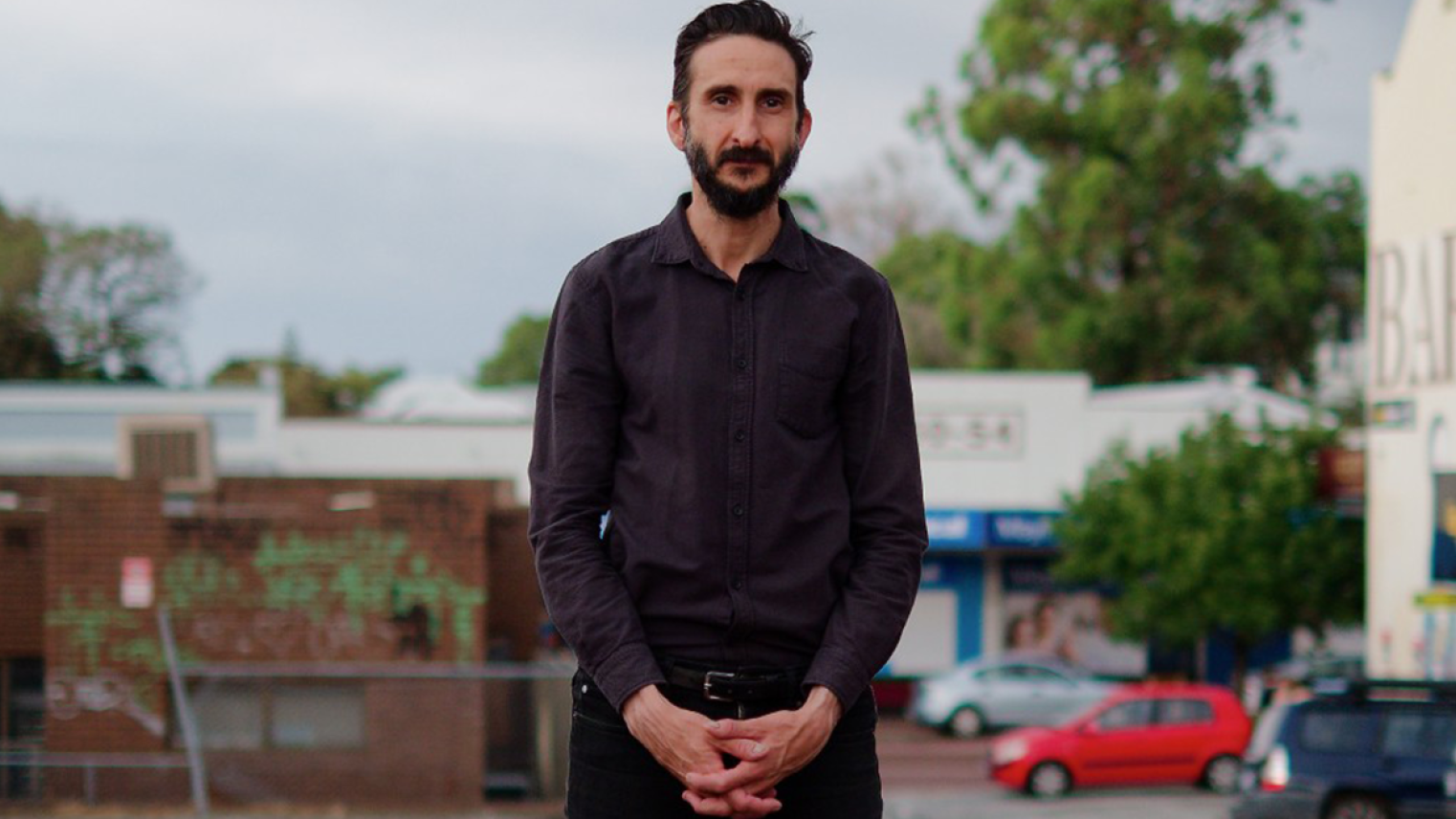
Benedict Moleta is a PhD candidate in the Department of International Relations at the Coral Bell School of Asia Pacific Affairs within the ANU College of Asia and the Pacific. As convener of Concept Club, he found Bell's words fitting to set the format of Concept Club. Speakers get ten minutes to present one idea, big or small, old or invented, adapted or inverted. The club has hosted talks on regionalism and the state, para-diplomacy and ex-gratia reparations, resource curse and politicised justice, gender justice and the built environment, revolutions and public goods. "The point is not to define the concept but to present an argument with, for or about it," Benedict says.
Coral Bell grew up without a mother, and with a father who lost his livelihood in the first year of the Great Depression. She was a university student in the 1940s, when poverty and war felt real and close at hand, and she lived through the four decades of the Cold War, when which the threat of nuclear catastrophe shifted constantly between possible and probable. Benedict says that history produced scholarship "urgent yet moderate, forceful but measured, and sober yet gilded with wit." "If you want my opinion," he says, “Them's good parameters for intellectual activity in any field.”
Concept Club started with presentations by Benedict and two office mates in our Department of International Relations, trying out ideas mid-way through their first PhD year. It has since drawn speakers from across ANU, Australia and internationally, including guests from Deakin University, the University of New South Wales, and most recently Egypt. A companion gathering, Concept Coffee Club, grew out of a suggestion from fellow PhD candidate Xueyin Zha: meeting over coffee, chatting spontaneously on concepts for two to five minutes, pulling apart ideas from "intramural crisis" to "poverty porn" to the biggest and blurriest idea of all: "the truth."
Benedict also wanted the club to provide a useful practice ground: a chance for PhD students to rehearse oral presentation ahead of their Confirmation of Candidature, or before a conference paper, while having an opportunity to hear how other students analyse and argue in a forum that is not defined by disciplinary or topical criteria, but rather by enthusiasm and collaboration. As he puts it, "it's about articulating ideas concisely and in a communal format, but without the obligation to deliver findings or prove your hypothesis was right from the start."
Benedict has been organising gatherings since he was a teenager, including concerts, magazines, art exhibitions and supper clubs. That "field work," as he calls it, has given him a bit of sound data on how these things can be started: "If you start something simply, sincerely, enthusiastically and openly, it can develop its own momentum, settle into its own rhythm – and with a bit of luck, start producing new worlds of thinking and doing, living and learning." Arriving at ANU as a mature-age PhD student in 2024, he quickly found himself riding the "waves of collegiality and brilliance" in the Bell School and starting Concept Club was his way of doing his bit "to keep the ripples rippling."
One of the best things about Concept Club, says Benedict, has been the unplanned magic of topics “swirling into each other” in the hour of presentation and discussion. From different fields and areas of focus, ideas sometimes seem to “want to be together” And from the simplest gatherings, “that swirling of ideas can go places – and take you places – long after the hour is over.”
Benedict's own PhD examines Coral Bell, the scholar for whom the school is named. He discovered her work in 2019, via Henry Kissinger via Olivier Roy via political Islam. Bell’s prose drew him in first: "clear thinking conveyed in well-composed sentences, with scale and detail intermixed, and with the gravest aspects of international affairs analysed without hyperbole and without bluster." The first Coral Bell book he read was her 1962 Negotiation from Strength – which was developed from Bell’s PhD, written in the late 1950s. Her best-known book here in Australia, Dependent Ally, sits within a body of work spanning six decades in English universities and Australia, with long attention to international crises, debatable alliances, and the highs and lows of American foreign policy. Benedict points to her writing on NATO-Russia relations, running from the 1950s through to Vladimir Putin's 2007 Munich Security Conference speech, as "incandescently instructive" given the dangerous state of relations between NATO and Russia today. He recommends a short 1981 essay, Inklings, in which Bell predicts the end of the Soviet Union and a period of long international danger to follow.
For his own Concept Club talk, Benedict presented Olivier Roy's thesis on the "failure of political Islam," an idea he first engaged with while researching Hamas and Hezbollah for his master's thesis in 2019. Roy's argument, built substantially around Iran after the 1979 revolution and Afghanistan in the 1980s, holds that Islamist movements attempting to make the transition from resistance to government are bound to find their religious identity becomes either a mere ideological cover or a source of dysfunction. Benedict says in some respects the thesis still holds in 2026: "whatever patriotism may be galvanised in Iran as a result of attacks by America and Israel, it can certainly be argued that, since 1979, the country's government has not been successful in combining Islam with a viable state, a stable economy and a participating society." The talk, he says, "went across ok" at Concept Club and led to good discussion afterwards.
In a conference paper at Deakin’s Middle East Studies Forum later in 2024, Benedict took the idea of “the failure of political Islam” to the position of Hamas in the present, suggesting that Hamas had now demonstrated in practice the limits of Roy's theoretical thesis, by "catalysing regional change that was likely to expand and ramify," regardless of the fact that Hamas has no prospect of attempting a return to the sphere of government in the years ahead.
At Concept Club, Benedict kept his own talk introductory, "so that the two other speakers could experiment and explore a bit more, and there would be decent time for Q and A at the end." But it was a valuable exercise in trying to convey the essentials of the concept, and show its uses and limitations, thirty years after its first appearance in Olivier Roy’s work.
Asked whether two years of ten-minute talks have changed his own research, Benedict calls it "one round after another of happy, instructive, mind-expanding discussion and debate."
The club now streams online, drawing attendees from far beyond Canberra. Recent sessions have brought together a Lecturer in English Literature presenting from Egypt, a newly graduated PhD student from the University of New South Wales, a former Italian diplomat, a PhD candidate from the ANU School of Regulation and Global Governance, and a visiting scholar from the University of Bologna. At the club’s April gathering, the final question of the day came from an attendee online, who Benedict says "beautifully expanded the themes touched on in all three talks, taking them into the imaginative sphere of literary fiction." Staying in contact with this imaginative contributor, Benedict then invited her to speak at the following club – and so Dr Raghda Emam of Mansoura University, Egypt, became the club’s first international speaker in July, with a fascinating talk on the concept of EcoSufism.
Asked which concept has stayed with him longest, Benedict says: "I hate to do an Audrey Hepburn, but each in its own way has been..." However, one he keeps coming back to is Wenting He's talk on ambiguity, delivered first on our ANU campus and later at a public session hosted by the Australian Institute of International Affairs, when Benedict took the club on tour there in 2025. Wenting, he says, took "the biggest unknown unknown of all" and brought "its strangeness into a clear frame, ready to be discussed afresh," all in under ten minutes.
Image credit: Darren Clayton
If you would like to get involved in Concept Club, you can get in touch with Benedict at benedict.moleta@anu.edu.au and keep up with his musings on LinkedIn here.