

Primary Landing Page

Objectives

The Garrurru Education and Employment Strategy has two key objectives:

Education: attract and support Aboriginal and Torres Strait Islanders to study at the College at undergraduate and postgraduate levels;

Employment: increase and foster the participation of Indigenous academic and professional staff in the College’s workplace at all levels.

Underpinning these objectives is our continued commitment to promoting the understanding of and competency in Indigenous culture and history among the College’s staff and students.

Framework

Undergraduate and Postgraduate Education

In support of the Garrurru Strategy’s education objective, the College is delighted to offer the Garrurru Indigenous Undergraduate Accommodation Scholarship and the Garrurru Postgraduate Indigenous Scholarship to prospective and current students of the College.

Professional and Academic Employment

To achieve the Garrurru Strategy’s employment objective, the College offers a broad range of professional and academic employment opportunities to Aboriginal and Torres Strait Islanders at various stages of their careers. These include Academic fellowships, Identified professional and academic positions, Internships and Traineeships.

Gulumbu Yunupingu

Yirrkala, Northern Territory c.1943–2012
Language group: Yolngu, Gumatj clan

Garrurru 2011

The strategy has been named after the artwork Garrurru (Yolngu for 'sail') which was commissioned by ANU in 2008 for display in the atrium of the Hedly Bull Building. The artwork by Gulumbu Yunupingu, completed in 2011, represents a longstanding dialogue that occurred over several hundred years between the Yolngu people and Macassan sailors who travelled to the Northern Territory coast to harvest trepang (sea cucumber), a valuable commodity for Chinese markets, establishing significant trade and cultural exchange with Aboriginal communities.

The Garrurru Strategy aims to sustain the continuation of the exchange by supporting Aboriginal and Torres Strait Islanders to study and work at the pre-eminent ANU College of Asia and the Pacific.
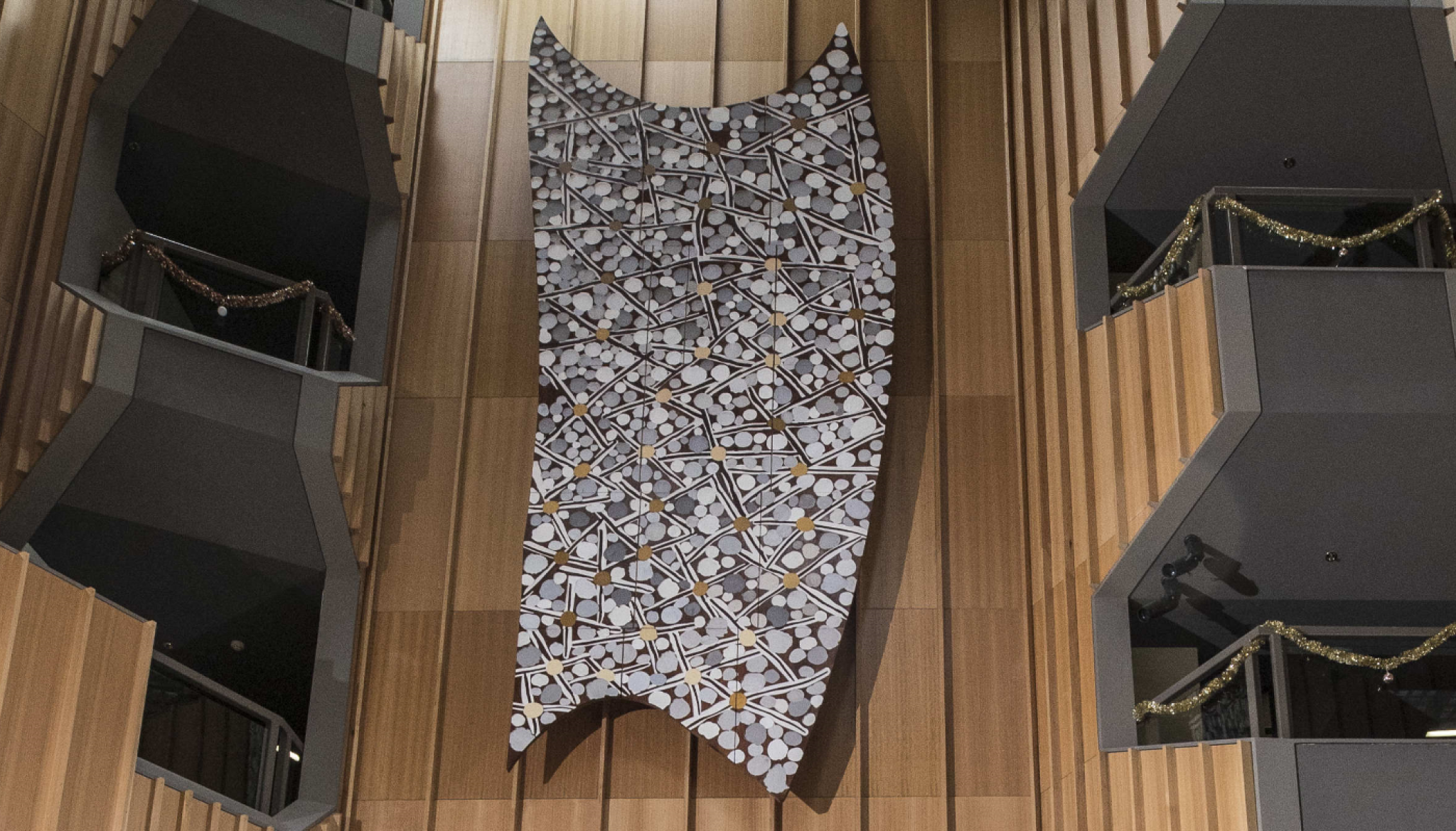
Garrurru ('Sail') 2011 - Gulumbu Yunupingu

CAP RAP Committee

The College’s Reconciliation Action Plan (RAP) Committee embodies the College’s commitment to an Australia that provides equal chances for all, while recognising and respecting the special place, culture and contribution of Aboriginal and Torres Strait Islanders as Australia’s First Peoples.

The College recognises, celebrates and advances educational and professional opportunities for Aboriginal and Torres Strait Islanders. The key cornerstones of our Reconciliation Action Plan in the college are embodied in the Garrurru Education and Employment Strategy. These include educational scholarships and employment strategies to advance the representation of Indigenous and Torres Strait Islanders among our student and staff population. 

Furthermore, we seek to develop a real awareness, understanding, appreciation and respect for the culture and history of Indigenous Australia across the College through cultural awareness training, our events, and incorporating Indigenous protocols and symbols into College workspaces.

The CAP RAP Committee will coordinate and focus its activities across four key portfolios:

  1. Culture and Recognition
  2. Outreach and Engagement
  3. Education
  4. Employment